Bad drain odours: how to get rid of them for good
If the smell keeps coming back, you are treating the symptom. Here is how to identify the real cause, then fix it.
Where the smell really comes from
A smelly drain is almost always down to biofilm: a layer of grease, soap and hair stuck to the pipe walls, where bacteria multiply and give off sulphur. Pouring in a scented product masks the smell for a few hours. The biofilm stays put.
Three other causes come up often, and they can be fixed without any product.
The diagnosis in three questions
- Does the smell come from a rarely used sink or shower? A guest shower, a utility room sink. The trap has dried out through evaporation, and sewer gases rise freely. Run a litre of water: if the smell goes away, problem solved.
- Does it smell stronger in hot weather or after rain? That points to poor sewer ventilation or an overloaded septic tank, not a trap problem.
- Does the water drain slowly? Then it really is biofilm, and it is already thick.
What fixes the problem for good
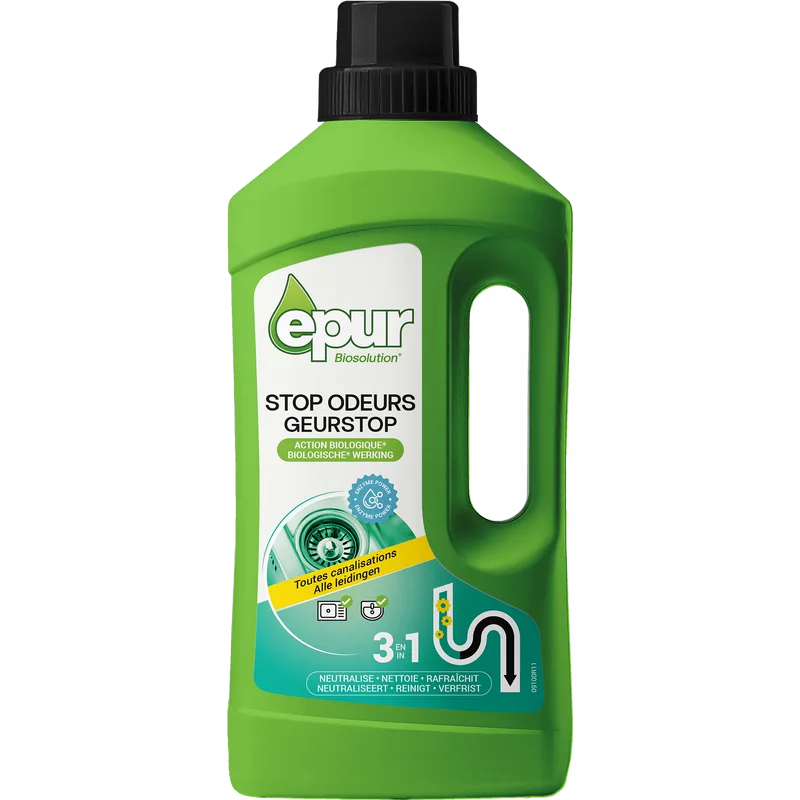
You need to digest the biofilm, not perfume it. Enzyme formulas break down organic residues at the source. It is slower than a caustic unblocker, but it treats the cause and harms neither your pipes nor your septic tank.
The deep treatment. Pour 250 ml of Drain odour stopper into the drain in the evening, then do not run any water for at least six hours. Overnight is the right time: the product stays in contact with the pipe walls instead of being washed away.
Maintenance. Two capfuls (80 ml) per week in each problem drain. This is what stops the biofilm from forming again.
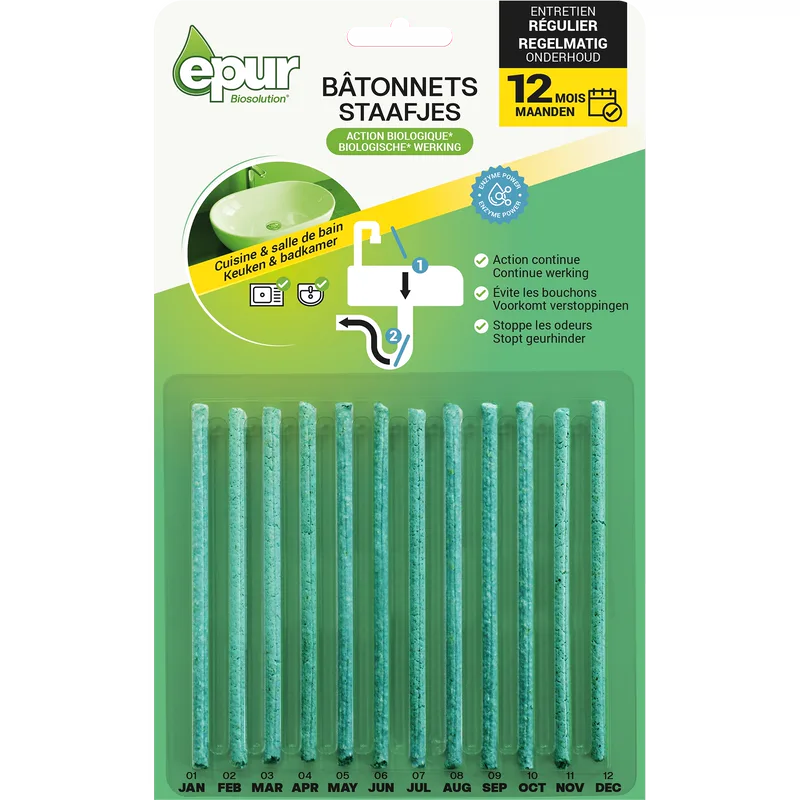
The monthly routine. One drain cleaning stick in the sink and one in the shower. It dissolves slowly and keeps the pipes clean without you having to think about it.
Habits that prevent all this
- Never pour frying oil down the sink. It sets as it cools and forms the backbone of the blockage. Take it to the recycling centre.
- Fit a hair catcher in the shower. Three euros, and most of the problem disappears.
- Run hot water after washing up by hand, to carry away grease while it is still liquid.
- Run water through rarely used sinks and showers once a month, to refill the traps.
Baking soda and vinegar: not such a good idea
The mixture foams spectacularly, and that foam does next to nothing in a drain: the reaction happens at the top of the pipe, not where the blockage is, and the two ingredients neutralise each other. It is fine for freshening a plughole, not enough for established biofilm.
If you have a septic tank
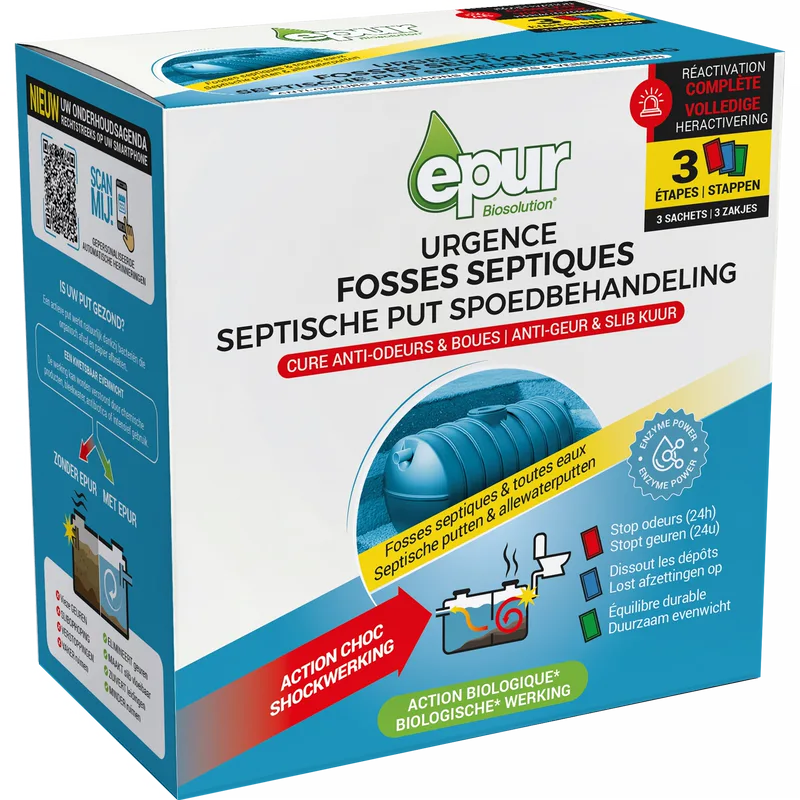
A persistent smell in the whole house, rather than at a single sink or shower, does not come from the drains: it comes from the septic tank. A tank whose bacterial flora has collapsed, often after a caustic unblocker or a course of antibiotics, stops digesting the sludge and starts to smell. In that case, you need a shock treatment, followed by regular maintenance with a septic tank activator, every week.