How to descale your coffee machine naturally?
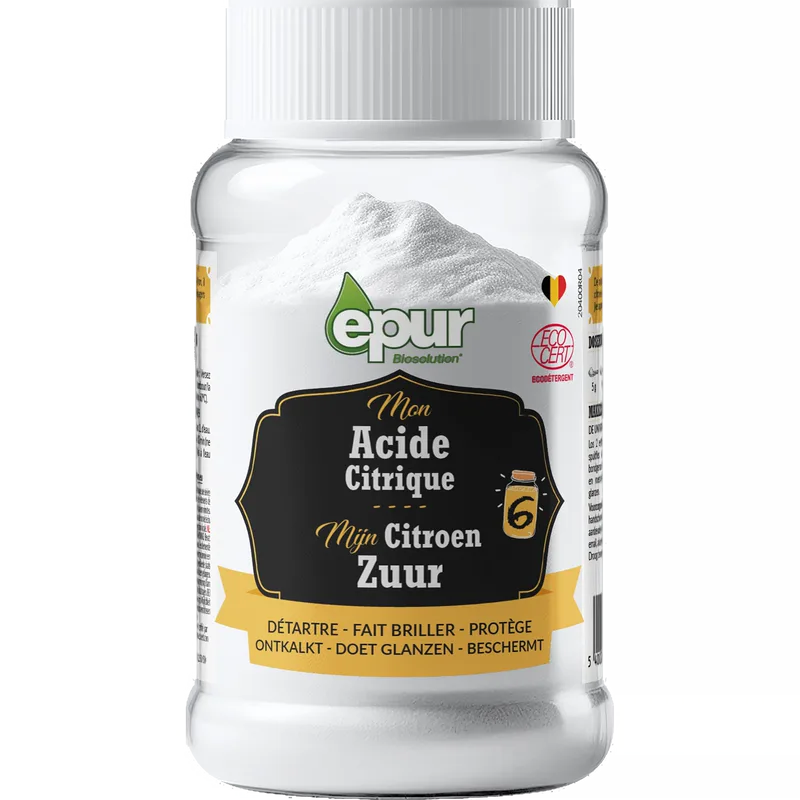
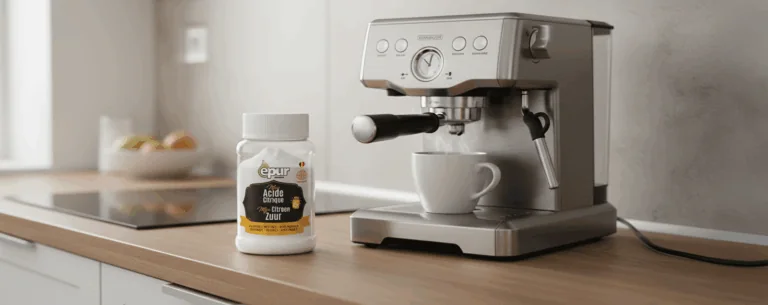
Citric acid does the job of a shop-bought descaler, for a fraction of the price and without the smell. As long as you stick to the dose and rinse.
How to tell it is time
Three signs never lie: the flow slows down, the machine gets noisy, and the coffee comes out less hot. By then, limescale has already been building up for a while. In Belgium, where the water is fairly hard in most municipalities, plan to descale every two to three months with daily use.
The recipe
- 1 litre of warm water
- 2 tablespoons of citric acid, about 30 g
Do not increase the dose thinking it will work better: a solution that is too strong attacks the rubber seals in the machine.
Dissolve the citric acid in the warm water and pour the solution into the water tank.
Run a cycle without coffee and stop it halfway. Leave for twenty minutes, so the solution has time to work on the limescale in the boiler.
Finish the cycle, then run two full tanks of clean water through. This is the step everyone rushes, and the one that decides how your next coffee tastes.
It also works for
- The kettle: same solution, fill the kettle, leave for 30 minutes without heating, then rinse twice with clean water.
- The iron: only if the manufacturer allows it, otherwise you may void the warranty.
- Taps: soak a cloth, wrap it around the spout, leave for an hour.
- The washing machine: 6 to 8 tablespoons in the drum, empty cycle at 60 °C minimum, twice a year.
What not to do
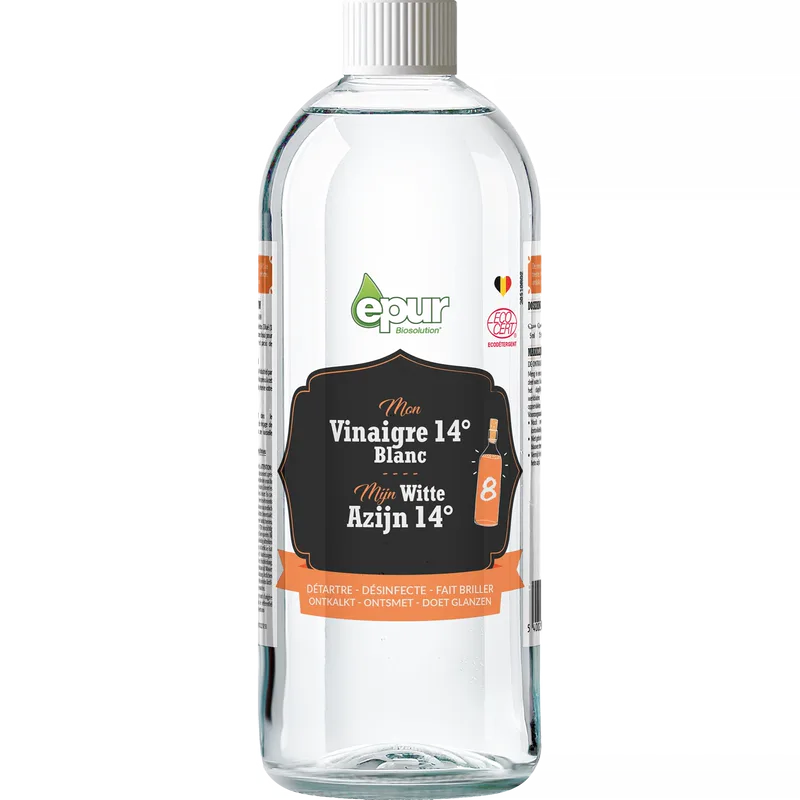
Vinegar in an espresso machine. It does descale, but its acidity attacks the seals and aluminium parts in some machines, and the smell lingers. Many manufacturers explicitly rule it out. Citric acid is gentler on the mechanics and rinses out better.
Skipping the rinse. Two tanks, minimum. Acid residue gives the coffee a metallic taste for several days.
Descaling a capsule machine without reading the manual. Some have a dedicated programme and a circuit that has to be flushed in a specific order.