The grease trap, the forgotten part of the kitchen
It is buried near the kitchen, nobody looks at it, and it is the first thing to make itself known when there is a smell. Three minutes a week is enough.
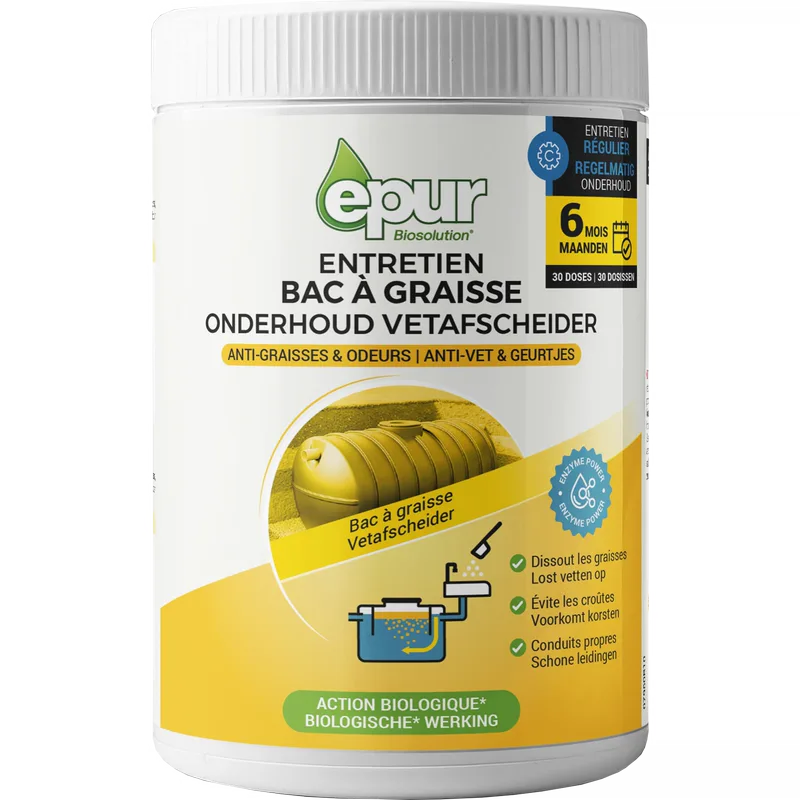
A grease trap is a small tank between the sink and the rest of the drainage system. The water slows down, fats rise to the top, particles sink. It is a trap, and a trap has to be emptied. Otherwise it overflows with exactly what it was meant to hold back.
The method
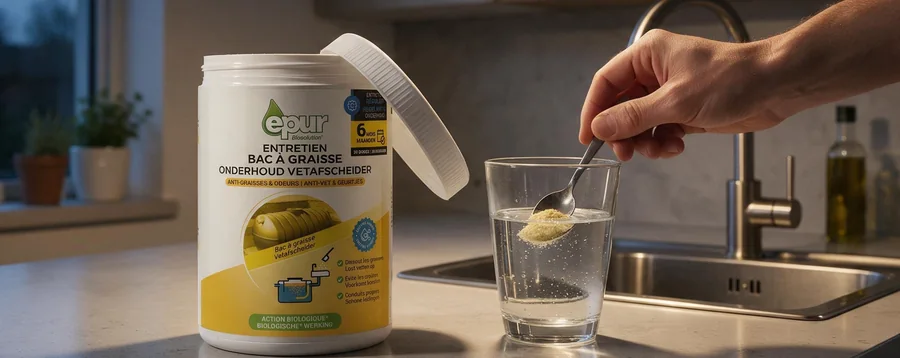
In the evening, after the last meal. Mix the weekly dose in a glass of warm water. Warm, not boiling: boiling water kills bacteria.
Pour into the kitchen sink, the one that feeds the grease trap. Run a trickle of water for a few seconds to carry it down.
Leave overnight. No washing-up afterwards, no dishwasher at midnight, and no boiling water in the following hours.
1 to 4 people: 1 dose. Over 4 people: 2 doses.
Signs that it is getting full
The sink smells
A rancid or sour odour, without the water draining any more slowly.
Water drains slowly
Only in the kitchen sink, nowhere else in the house.
A thick crust
When you lift the lid. A few centimetres is normal, ten is not.
In case of blockage
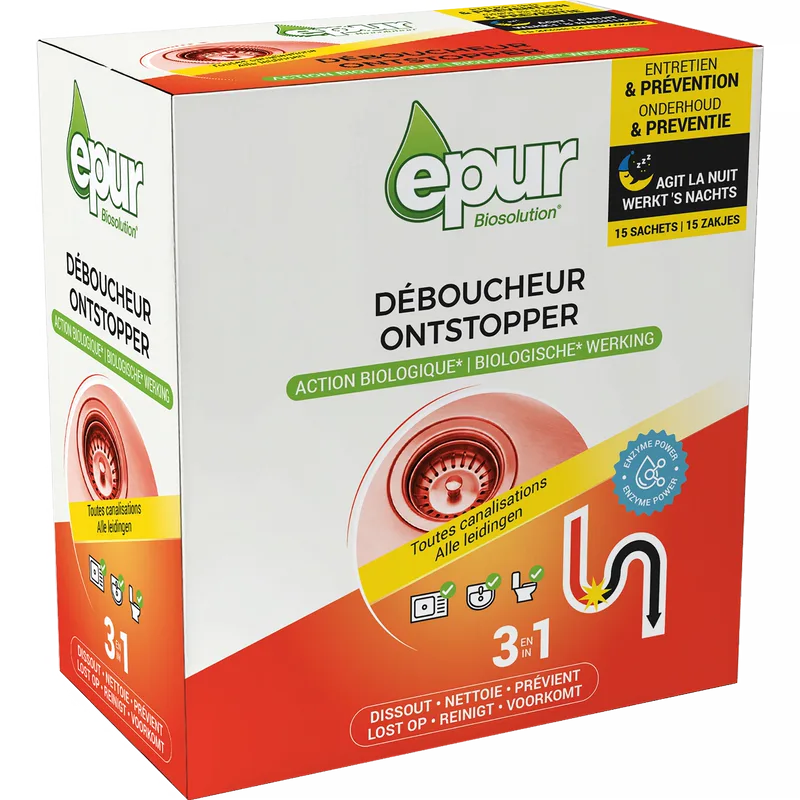
Do not double the dose and hope for the best. Dilute the entire contents of the tub in a bucket of warm water and pour it immediately into the grease trap, through the inspection cover. Once, then go back to the weekly routine. The other option is a course of Drain unblocker sachets: for a 100 L grease trap, 3 sachets a day for 3 days.
If the crust has hardened, the trap will need a clean-out before the biological treatment can take over again. Maintenance makes clean-outs less frequent, it does not replace them.
What costs nothing
- Wipe pans with kitchen paper before washing them.
- Never pour frying oil down the sink. It sets and forms the crust all on its own. Your local recycling centre will take it.
- Scrape plates into the bin before rinsing. The grease trap holds back fats, not rice.
The doses for our products are on their packaging, and that is what counts. If swallowed or splashed, call the Poison Centre on +32 70 245 245 and keep the packaging to hand.